
The International Student Cap Aftershock: The Policy That Hit Like a Tremor |
Unraveling the Impact: How the International Student Cap Shifted the Global Education Landscape. |
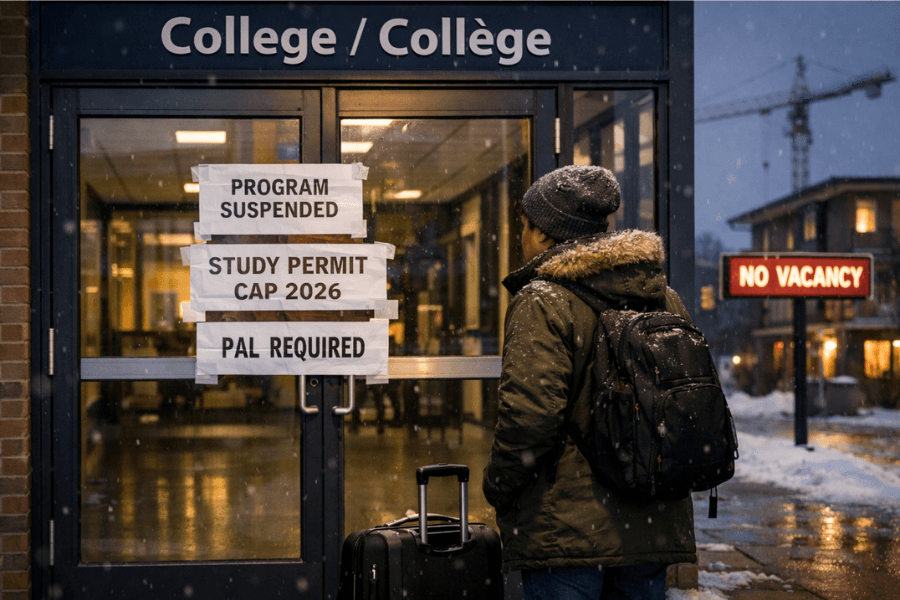
The international student cap isn’t just policy it’s an aftershock reshaping Canada’s education and immigration landscape in real time. Programs are shutting down, intakes are disappearing, and the study → work → PR pipeline is bending under pressure. It’s fear, urgency, and real-world consequences wrapped into one story which is exactly why it’s exploding across newcomer groups. Institutions are already sounding alarms. Some, like the Manitoba Institute of Trades and Technology, have publicly warned that enrollment drops tied to the cap threaten their viability. And with IRCC releasing 2026 allocations, the uncertainty isn’t fading it’s accelerating. A Shockwave, Not a MemoThe cap didn’t arrive as a quiet administrative update. It hit like a tremor. The aftershocks are visible everywhere:
This is a demand shock to a sector built on multiyear commitments. You can’t pull thousands of students out of a system designed around stability and expect it to hold. Where the Pipeline CracksThe study → work → PR pathway is a delicate choreography. Miss one intake and the entire sequence slips:
This isn’t “right-sizing.” It’s pulling key blocks from a Jenga tower and acting surprised when the structure wobbles. The Institutional FalloutColleges operate with fixed costs labs, leases, specialized instructors. When enrollment collapses overnight, the math stops working. The first programs to go are often the ones communities rely on most:
On a spreadsheet, they look “uneconomic.” In real life, they’re oxygen. When they disappear, regions lose essential workforce pipelines and employers lose confidence in predictable talent supply. The Human CostStudents and families feel the shock immediately:
Many chose Canada for predictable rules and a fair, transparent route to PR if you did the work. Instead, the rules blur just as the finish line comes into view. The Bluntness ProblemSupporters argue the cap squeezes out bad actors. Fine close predatory pathways. But a blunt cap is a sledgehammer where a scalpel is needed. It:
Add allocation politics and the brand damage multiplies. Ottawa sets the ceiling, provinces slice the pie, and smaller public campuses get squeezed hardest. Meanwhile, WhatsApp screenshots outrun official PDFs. One viral “intake canceled” post can undo weeks of government messaging. The cap may intend order. What it broadcasts is chaos. The Housing–Labour ParadoxCanada is short of both homes and talent. The cap risks shrinking the very workforce needed to build housing and staff essential services. A cap doesn’t produce:
Destabilizing trades and applied programs undermines the very goals policymakers claim to prioritize. When Pathways Narrow, Shadows GrowScarcity doesn’t eliminate demand it pushes it underground. That means:
This isn’t an integrity fix. It’s an integrity problem with a new coat of paint. A Smarter Path ForwardCanada doesn’t need fewer students, it needs better-aligned pathways. Shift from headcounts to outcomes. Tie international seats to real metrics:
Programs that feed shortage occupations should earn more seats. Programs that don’t should shrink. That’s quality control with teeth. Modernize the PGWP:
If the cap stays, make it nimble — not political. Engineer the CushionTransition management is the difference between a bruise and a fracture.
If policymakers engineered the shock, they can engineer the safety net. Two FuturesKeep the cap blunt, and the next year looks like this:
Or treat this moment as a forced reset:
The cap is more than a number. It’s a signal. Flip that signal, reward quality, align with real labour needs, and cushion the transition and the pipeline flows. Refuse, and it breaks. |
0 Comments
Join the conversation
Be the first to comment
Share your thoughts above.